Welcome to ADOIT!
Thank you for your interest in ADOIT! This Quick Start Guide will help you quickly explore the key features. It will guide you and your colleagues through the first steps, so you can test ADOIT optimally and unlock the full potential of our software!
You don’t need to follow the steps in the exact order described here. Simply review them - you might decide to prioritize or skip certain steps.
Login
You have received an email with a credentials-sheet. This sheet contains your login details and a link to the test account.
- Click on the link in the sheet to access the test account.
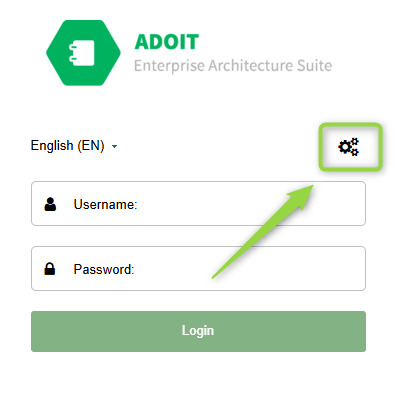
- Click on the gear icon
 located above the username to log into the administration. Use the credentials from the credentials-sheet.
 - Change your password upon your first login and make sure to remember it!
Get to know the ADOIT administration and settings.
To help you quickly navigate the ADOIT administration and configure the right setup for your team, we have compiled the most important information for you. Below, you will find a list of videos and links to helpful resources.
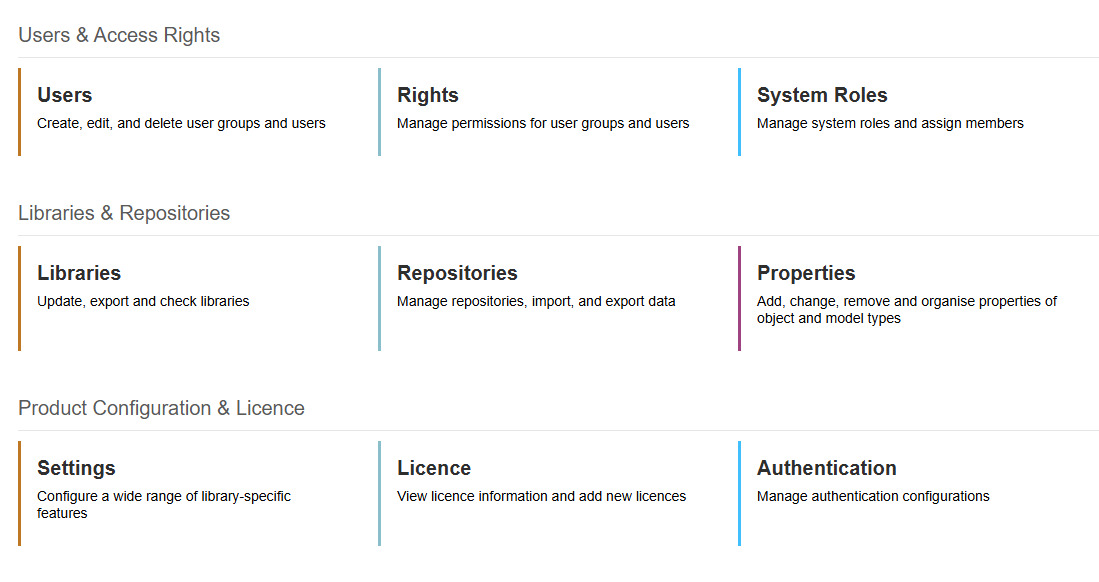
Important Settings:
- Users: Management of users and user groups
- Permissions: Assignment and management of permissions
- System Roles: Management of system roles
- Repositories: Management of repositories, import/export of migration packages and models
- Properties: Customization of fields for ArchiMate elements
- Settings: Various options, mostly preset
Helpful Videos to Get Started
To make it easier for you to get started and test, we have selected a video from our video tutorial series with useful first steps in administration:
 Get an overview of the key components of administration.
Our playlist offers more exciting videos – featuring the key functions and clever tips for ADOIT!
Our Admin-Help
Prefer reading over watching? In our Admin-Help, you’ll find all the settings described in detail.
Import examples for your colleagues
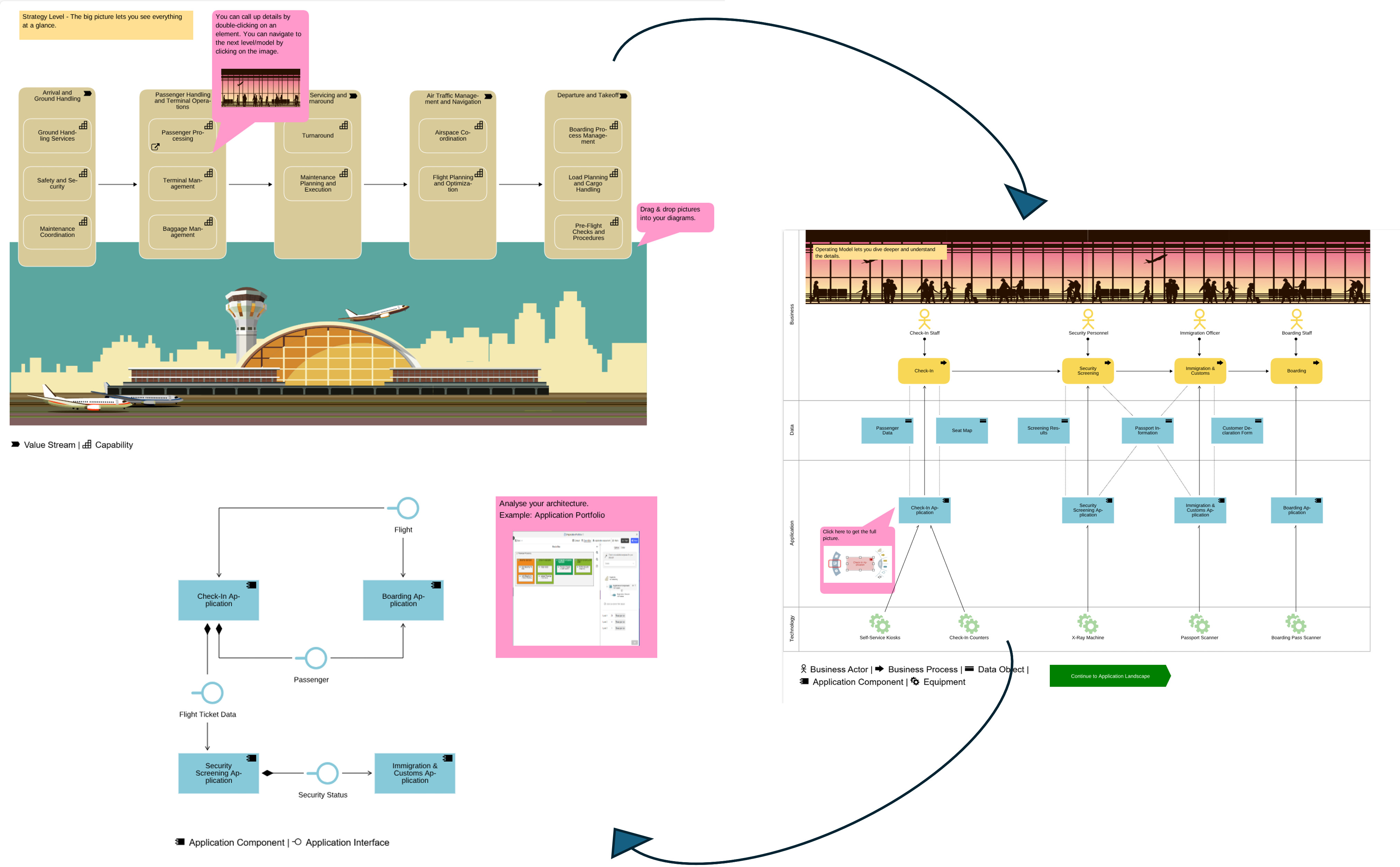
By default, our premium test accounts come with a banking example model, which includes a variety of models and analyses. Additionally, we have prepared 5 industry-specific example models that are smaller and more streamlined, making them ideal for getting started. These consist of:
- 3 models
- 1 analysis model
- 1 workspace
Simply import the file, and your colleagues can explore the models at their own pace.
Download the desired example model directly:
- Model of an Airport
- Model of a Bank
- Model of an Insurance
- Model of a Retailer
- Model of a Toymanufacturer
Structure of the example models:
- Capability Map
- Operating Model
- Application Landscape
- An analysis with a portfolio view of the application components
Additionally, you will find a pre-configured workspace in the Workspaces scenario.
Importing the example models:
- Download one of the example models above.
- Go to Repositories in the administration and click on More Options in the top right corner. Then click Import Repository.
- It is important to import it as an INDEPENDENT Repository (select the first option in the import settings).
- After importing the example model, you will need to assign access rights to yourself or the responsible colleagues who should see the example. You can do this under Users in the administration. Select your user and those of your colleagues who should be able to see the example and click Edit. Under Repository, you now need to select the corresponding repository. For more information, please refer to our Online-Help.
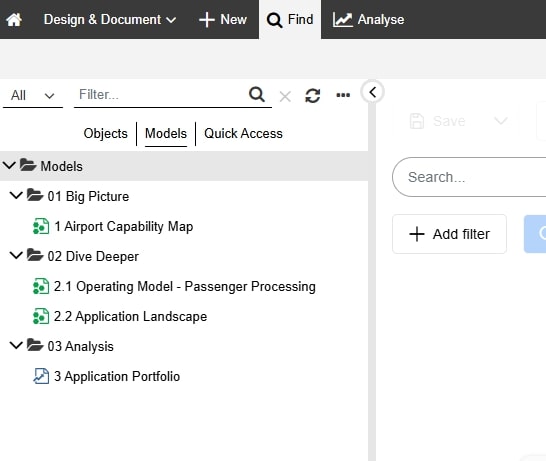
- Log out of the administration and log into ADOIT to check if the import was successful. When logging in, select the new repository. You should now see the following in the explorer:
Great, the first steps are done! Now, let’s move on with your colleagues

Normally, ADOIT accounts are managed via SAML. However, in the test account, it works differently. To allow your colleagues to test ADOIT freely, we have already prepared user accounts for them. You can find these accounts in the Administration section under "Users" or on the credentials sheet. There are just a few details you need to adjust:
- Go to Administration > Users > select a user > edit (⋮) > General
- Name: Enter the names of your testers to stay organized.
- Email: Make sure an email address is provided for each user. This is required for password resets!
- Finally, distribute the login details from the credentials sheet to your testers and share the ADOIT URL with them via email.
Difference between User and Reader: In the test account, you will most likely use the User role to fully test ADOIT’s features. However, in general, we differentiate between:
- Reader: Users assigned to this group have read-only access.
- User: Users assigned to this group have full write access.
- Administrator: Users in this group have full write access and additional access to the administration.
Great, your colleagues are now on board! Show them the key tips and take the time to test all the features together!

Import existing data via the Excel Interface
Do you already have architecture information in Excel format? Use our Excel templates to import the data and test our features even more effectively:
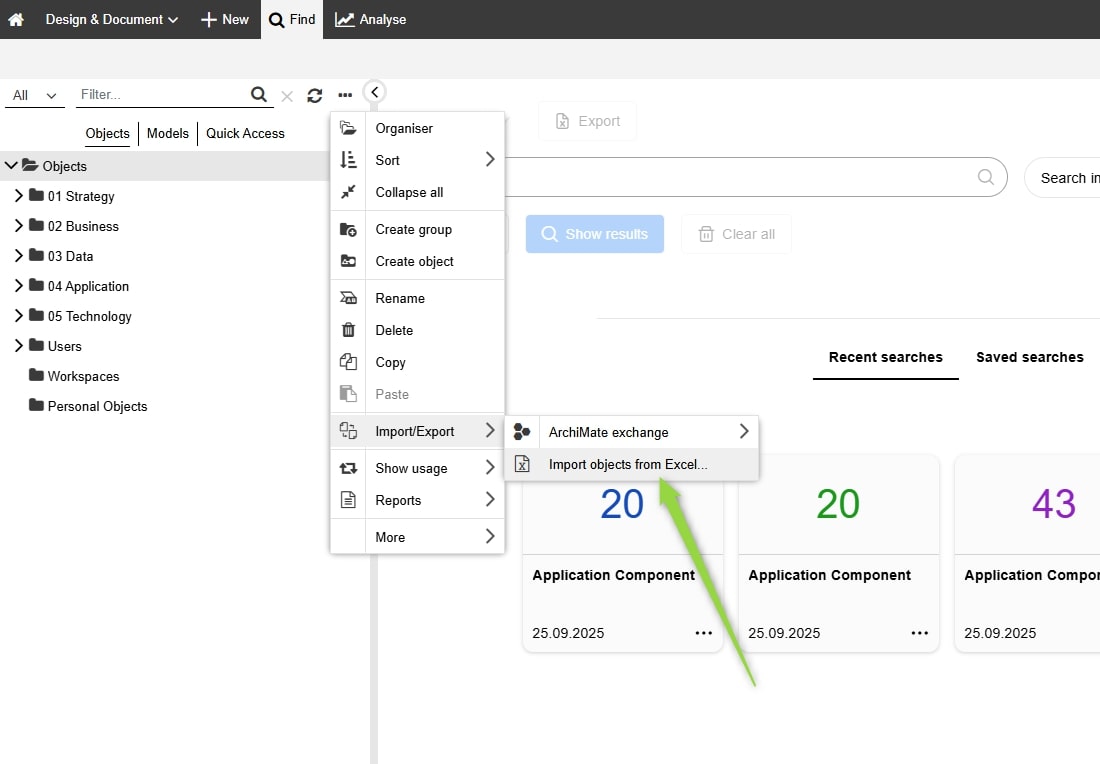
You can find our template directly in the Object Explorer:
- Select the folder where you want to import the data.
- Open the context menu (the three dots in the top right corner of the Explorer).
- Choose "Import/Export" → "Import objects from Excel...".
- Download the template using the download icon.
- Fill in the template with your architecture information and upload it again.
For more information, please refer to our Online-Help!
Of course, you can also customize the template to fit your needs. You can find more information about this here.
Reduce modeling complexity with metamodel profiles
In ArchiMate, there are many elements and relationships. Initially, your team will only use a few of them. Therefore, we offer so-called metamodel profiles. These act as a filter for elements and relationships. All our predefined views, analyses, examples, and templates are based on this filter.
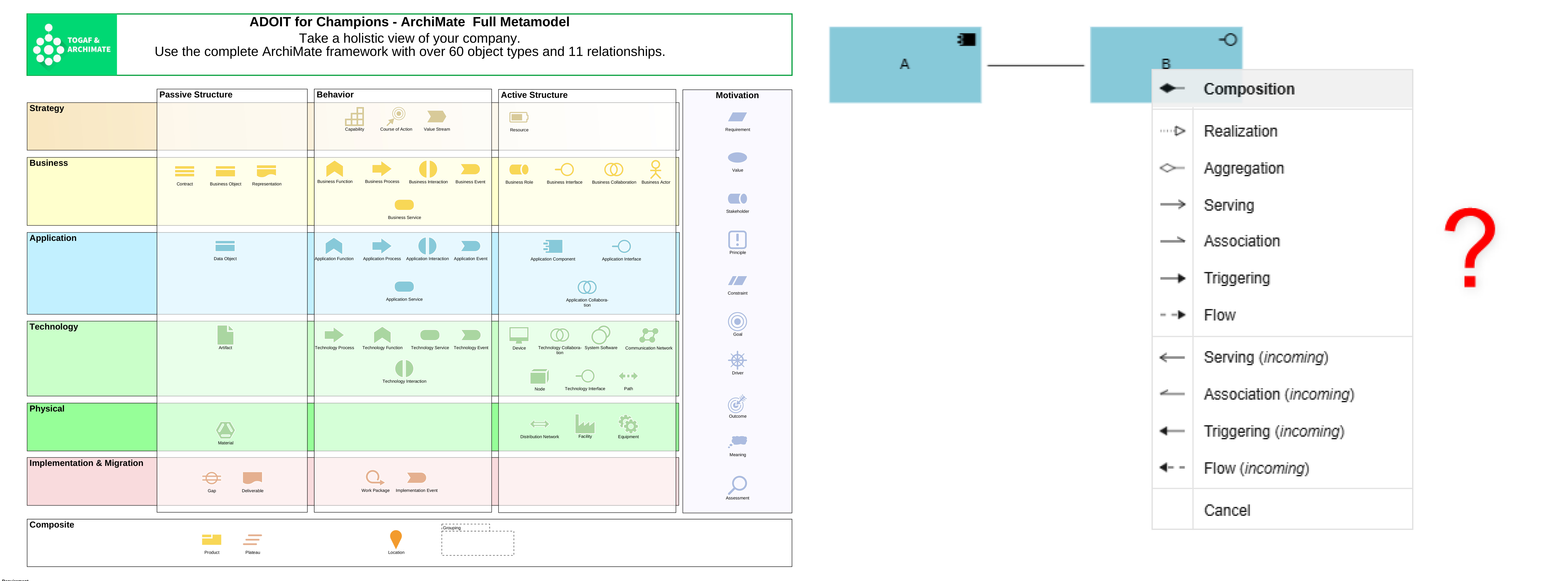
Switch the metamodel profile via Setup  in the toolbar. Please note that the selected profile will also be activated for your colleagues.
More information about metamodel profiles can be found here.
in the toolbar. Please note that the selected profile will also be activated for your colleagues.
More information about metamodel profiles can be found here.
In most cases, the profile "ADOIT for Fans of Lean Architecture" is used. In this profile, we have reduced the possible relationships between two classes to just one relationship. We recommend using this profile as a starting point. You can expand or further restrict it later based on your specific use case. More information, can be found here.
Activate ADOIT Forms
With ADOIT Forms, you can simplify data maintenance. It is a user-friendly, form-based interface that allows for easy data entry and updates – even for users who are less familiar with ADOIT or enterprise architecture. There are 3 use cases in ADOIT Forms:
- Create forms
- Distribute forms
- Fill out forms
For more information about ADOIT Forms, please refer to our Online-Help.
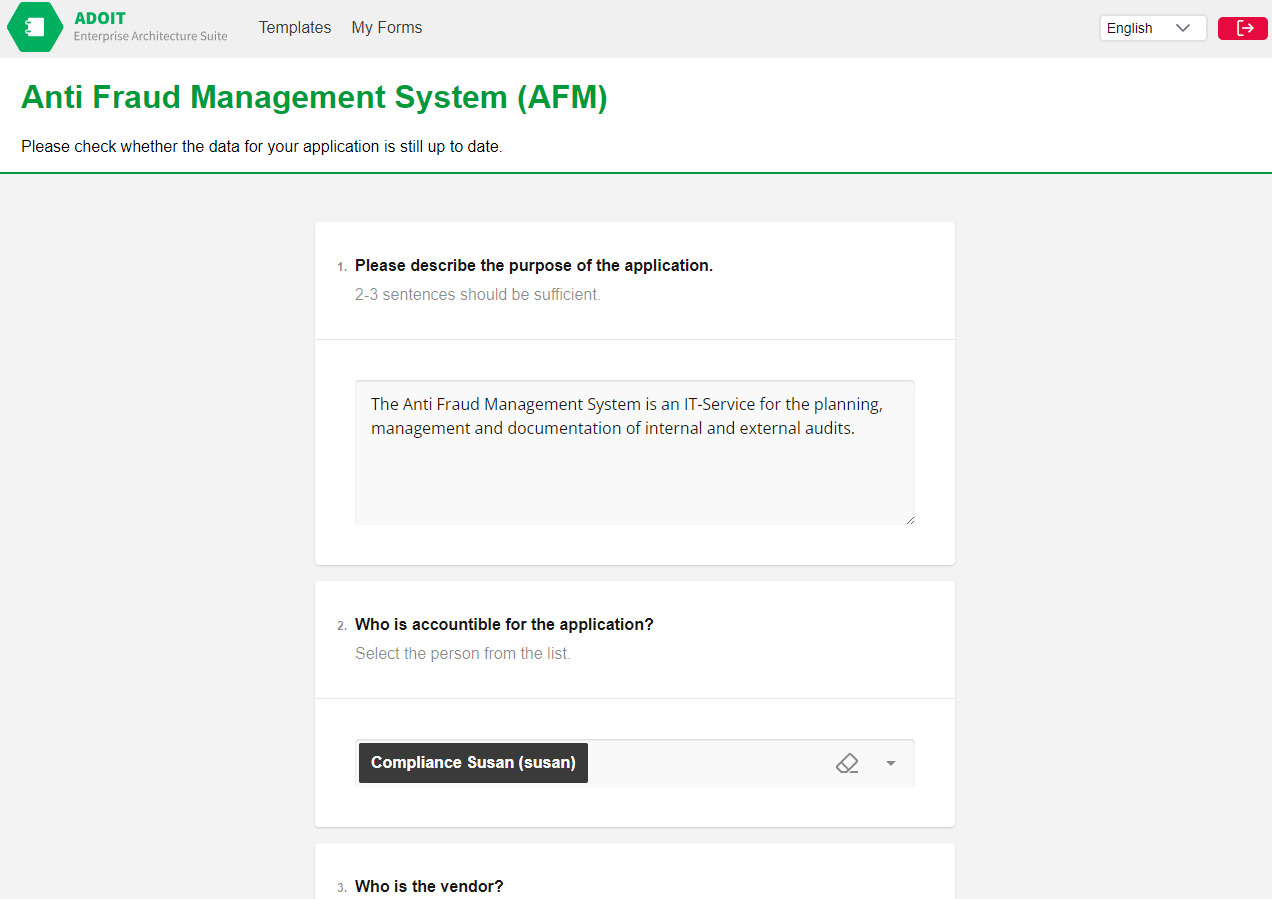
How to activate ADOIT Forms:
- ADOIT Forms runs in SaaS mode, so no additional installation is required.
- To activate Forms, log in to the administration.
- Navigate to “Settings” and click on “ADOIT Forms” in the list on the left.
- You can now activate Forms with the click of a button. All necessary settings for OAuth, REST, and CORS will be automatically configured in the background.
The most important steps are done!
Great job! You've successfully completed the first steps in ADOIT! Now you and your colleagues can continue exploring and testing the software at your own pace. To make the most out of your test account, we've compiled a list of useful features and resources here:
- Already using ADONIS? Discover the possibilities of integration with ADO Connect:
- Explore all extensions for ADOIT in our EA Marketplace:
- For more insights, know-how, and useful tips, check out our blogs or EA resources:
- Got more questions? Browse our FAQ section for many interesting topics:
For any further questions or concerns, to your BOC contact person!