New Features in ADOIT 17.4
ADOIT 17.4 introduces a range of enhancements, with a strong focus on administrative capabilities. Key highlights include support for SCIM, the ability to configure ADOIT as an OpenID Provider (OP), simplified file management, and extended options for tailoring the properties of object and model types. For all users, it is now possible to apply colouring to multiple object types in charts and models, making visualisations more powerful and informative.
New Features for All Users
Colour Multiple Object Types in Charts and Graphical Editor
In previous versions, you could already colour objects of one specific type based on the value of an attribute. With ADOIT 17.4, you can now define multiple colouring rules for different object types, using either a shared attribute or distinct attributes for each type.
Example: In a matrix chart that visualises the interfaces of applications, both the  Application Interfaces in the columns and the
  Application Components in the rows can now highlight their Investment strategy.
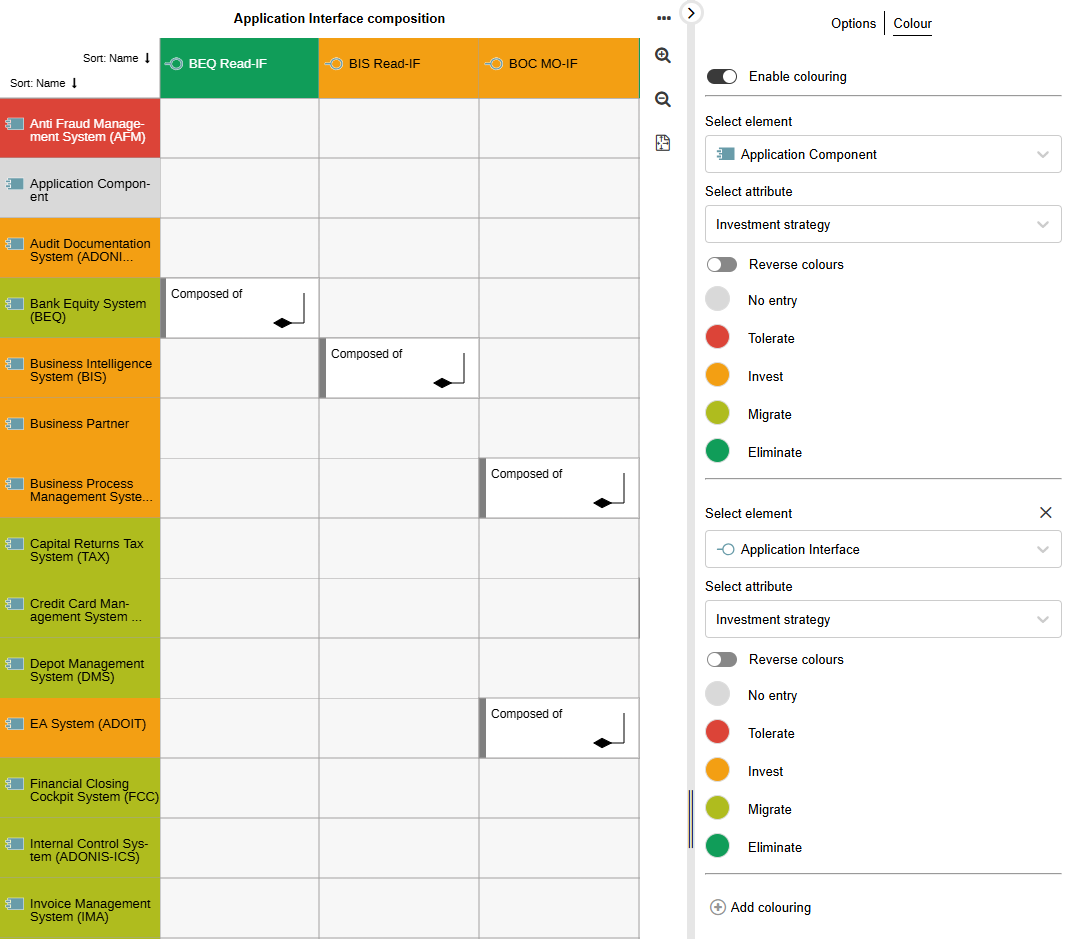
This new flexibility lets you highlight multiple types of objects in the same view, making your charts and graphical models even more informative and enabling an even deeper analysis.
For details, please refer to the sections "Make Objects Coloured and Create Heat Maps" and "Apply Colouring to Charts" in the User Manual.
New Features for ADOIT Administrators
SCIM Support
ADOIT 17.4 introduces support for the System for Cross-domain Identity Management (SCIM) standard, enabling automated user and user group provisioning via a standardised REST protocol. SCIM allows external systems to manage ADOIT user accounts in compliance with the SCIM 2.0 specification.
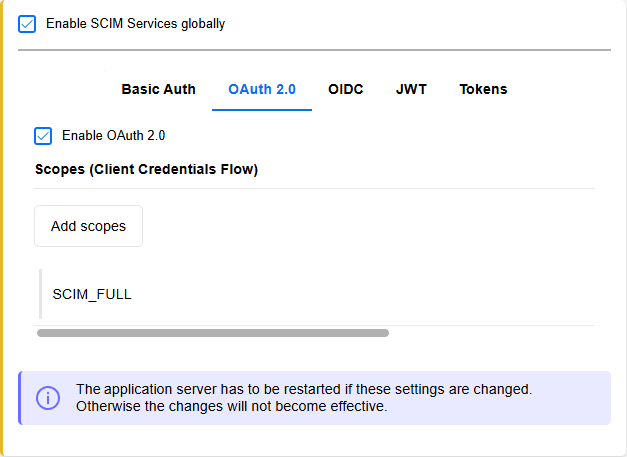
When used alongside, for example, SAML-based authentication with Microsoft Entra ID as the IdP for ADOIT, this opens up new use cases that were not supported before. These include automatically removing users from ADOIT when they are deleted in Microsoft Entra ID, or making users available in ADOIT before their first login so all stakeholders are available for assigning organisational responsibilities.
For details, please refer to the section "SCIM Services" in the Administration Help.
OIDC: Enable and Configure ADOIT as an OpenID Provider (OP)
The new OIDC page in the Authentication component lets you enable and configure ADOIT as an OpenID Provider (OP). In this role, ADOIT can authenticate users for external applications (OIDC clients), allowing users to sign in with their ADOIT credentials, similar to logging in with Google or GitHub on other websites.
This setup supports single sign-on (SSO) scenarios, making it possible for users to access third-party services with their existing ADOIT account. Administrators can configure trusted client applications to enable this functionality.

When used in this capacity to provide OIDC authentication for the REST API in ADOIT, client applications can not only authenticate users but also check their authorisation, for example, by verifying whether a user has a certain role or group assignment.
For details, please refer to the sections "Authentication > OIDC" and "Settings > REST API" in the Administration Help.
File Management Settings
In ADOIT 17.4, you no longer need to manually adjust configuration files to control which file types users and administrators are allowed to upload, as was required in previous ADOIT versions. Instead, you can now define these settings directly in the new File Management area in the ADOIT Administration. Here, you can also set file size limits for uploads and specify supported protocols for file pointer attributes.
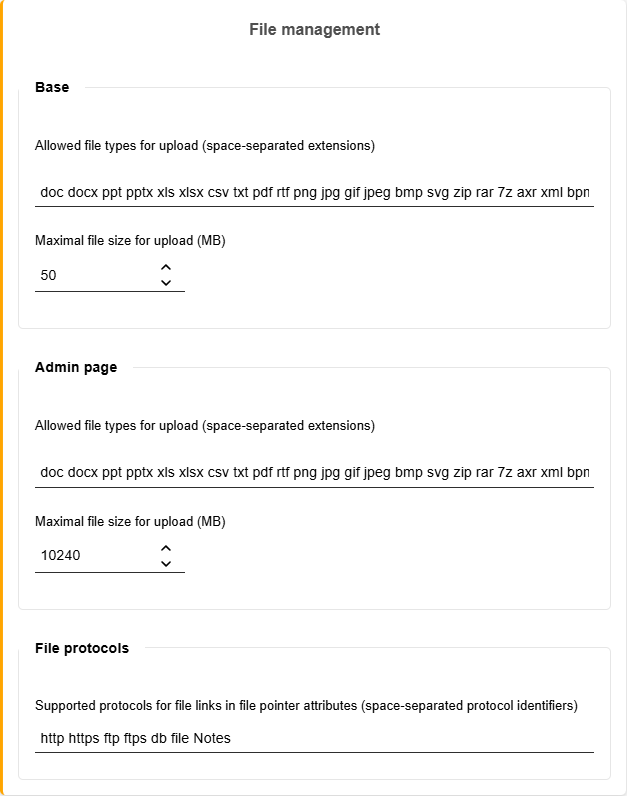
For details, please refer to the section "File Management" in the Administration Help.
Properties Module Extensions
The Properties component, available in the ADOIT Administration, has been enhanced to offer even more flexibility when tailoring the properties of object and model types to your organisation’s needs.
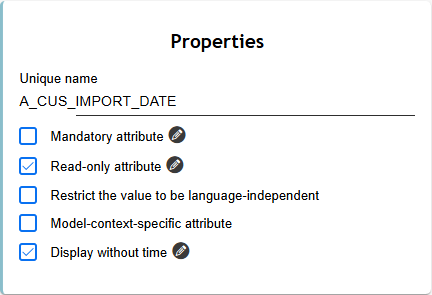
The following new features are now available:
Read-only: This option makes an attribute write-protected, so its value can't be changed in ADOIT. This is particularly helpful for attributes synced from other systems, where editing should only happen at the source.
Display without time: For attributes of the type Coordinated Universal Time, you can enable the new Display without time property to store only the date. Otherwise, the attribute will store both date and time.
Collapsed: The new Collapsed property gives more control over the layout of groups within chapters, allowing them to appear collapsed or expanded by default.
For details, please refer to the section "Properties" in the Administration Help.
Unshare and Delete Users
The new Unshare from all repositories and delete option allows administrators to remove users from all repositories they are shared with and then permanently delete them in a single step. This streamlines user management, since administrators previously had to unshare users manually from each repository before deletion was possible.
For details, please refer to the section "Delete Users" in the Administration Help.
Support Access
SaaS customers can now temporarily grant BOC employees access for troubleshooting and support purposes. When Support Access is activated, a temporary support user account is created with full access to the ADOIT Administration and its components, and all repositories.
For details, please refer to the section "Support Access" in the Administration Help.
Authentication: Upload Multiple LDAP Certificates
When configuring LDAP domain settings with LDAPS, you can enable SSL and upload an SSL (X.509) certificate. New in ADOIT 17.4 is the ability to upload multiple certificates instead of just one. This is useful, for example, when LDAPS requires both a client authentication certificate and a server authentication certificate, or when preparing for a certificate rollover to avoid downtime.
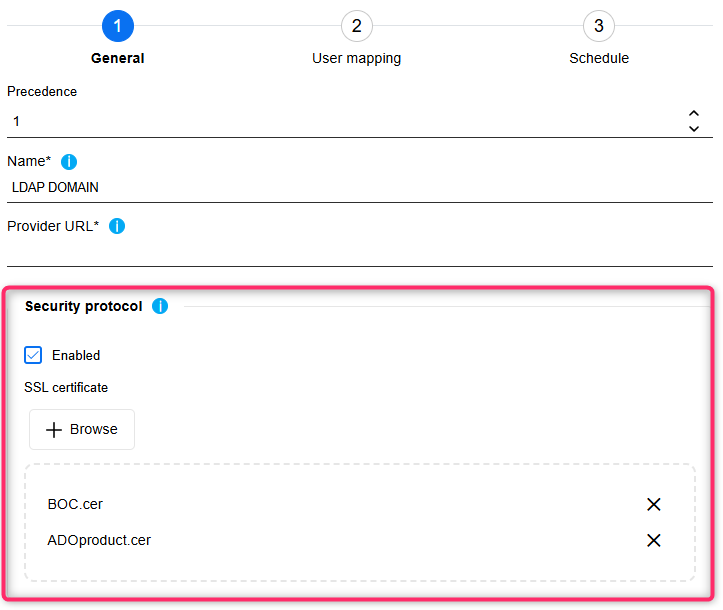
For details, please refer to the section "LDAP > General" in the Administration Help.
Migration from an Earlier Version of ADOIT to ADOIT 17.4
Changes to Software Requirements
Please note the following changes to the software requirements for running ADOIT when migrating from previous versions.
No longer supported
Tomcat 8 and Tomcat 9
Java 8 and Java 11
Added support for
Tomcat 10.1 and Tomcat 11
Java 17 and Java 21
Upgrade ADOIT
The Installation Manual contains a number of migration guides that will help you upgrade ADOIT from an older version to version 17.4. Each guide contains all the steps that need to be taken, with everything explained in detail:
Upgrade from ADOIT 17.0/17.1/17.2/17.3 to ADOIT 17.4 (ArchiMate Library)
Upgrade from ADOIT 15.0/15.1 to ADOIT 17.4 (ArchiMate Library)
Migration from ADOIT 14.0 or Earlier to ADOIT 17.4 (ArchiMate Library)
If you are using ADOIT 14.0 or earlier with the ArchiMate Application Library, please contact your ADOIT consultant for assistance with the required steps.
Switch from Standard Library to ArchiMate Library
With ADOIT 16.0, the ADOIT Standard Application Library has been discontinued and is no longer supported. Are you using ADOIT 15.0/15.1 or earlier with the ADOIT Standard Application Library? To upgrade to ADOIT 17.4, you need to switch to the ArchiMate Application Library. Please contact your ADOIT consultant for assistance with the migration.
Install Hotfix
You are already using ADOIT 17.4 and want to install a hotfix? Here are step-by-step instructions: